
- Northern Mongolia
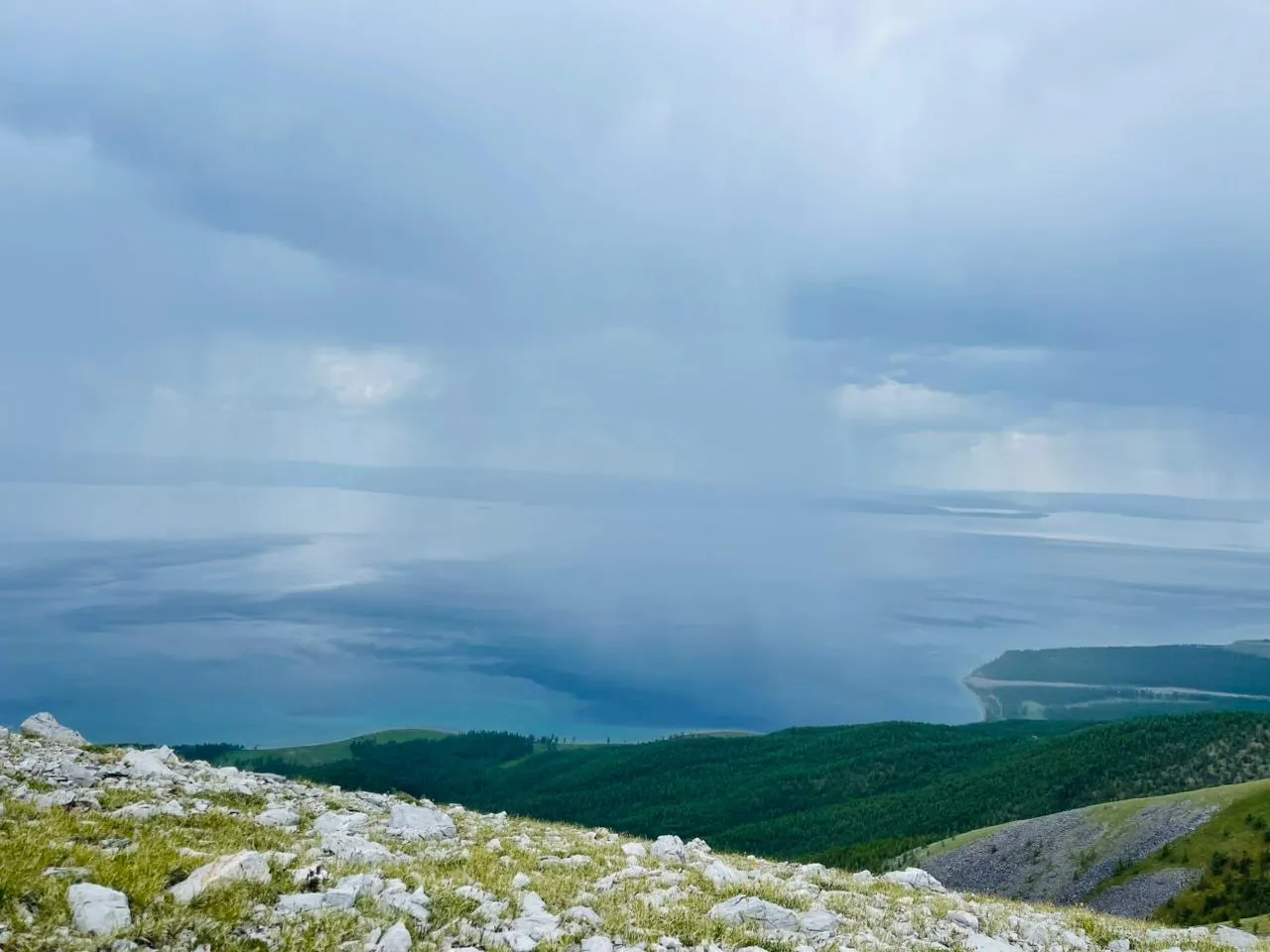
- Khuvsgul Lake
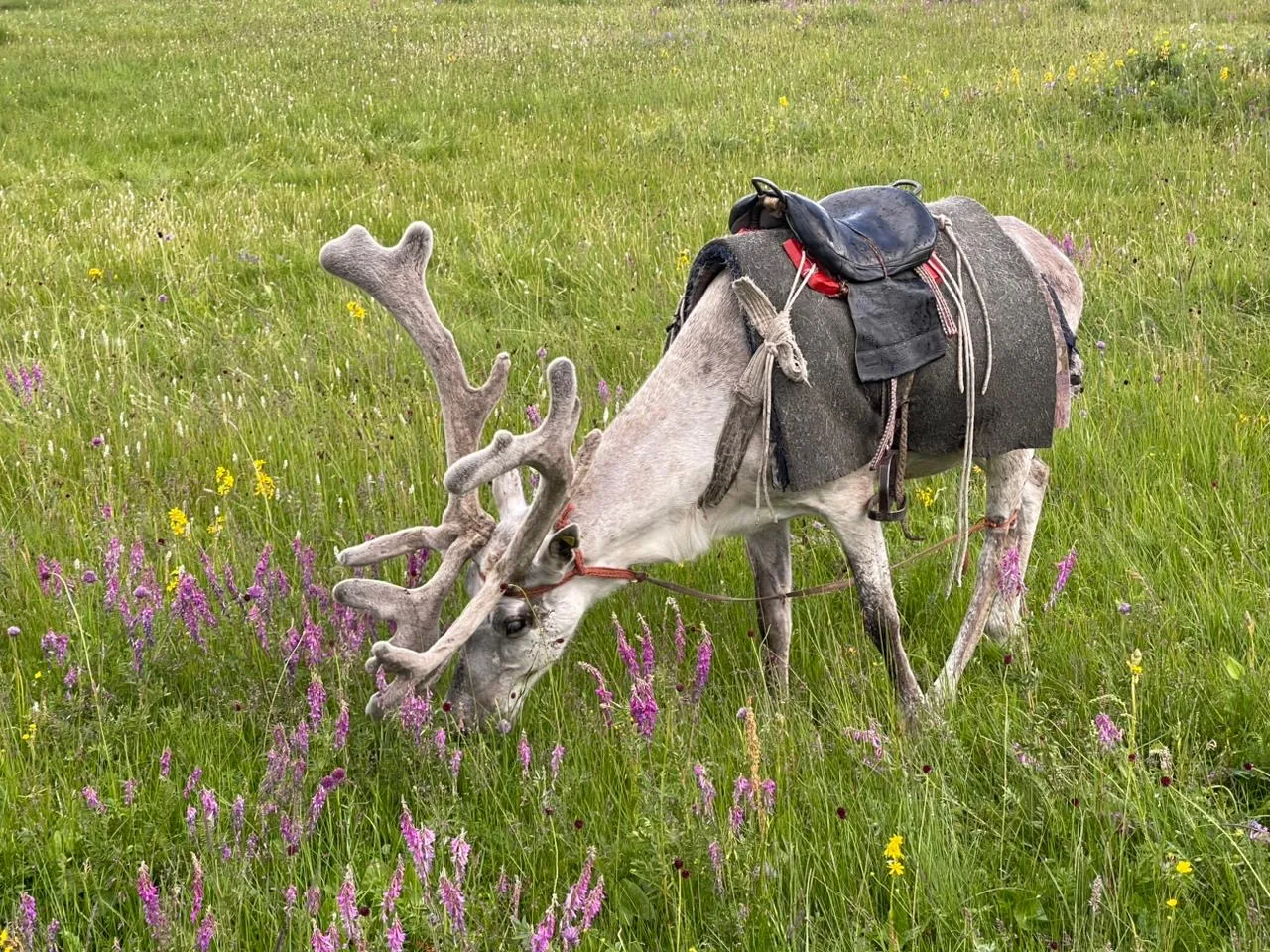
- Tsaatan reindeer herders
- Darkhad Valley
- Amarbayasgalant Monastery
- Mongolia taiga
- reindeer herding tour
Northern Mongolia is the part of the country that doesn’t fit the steppe-and-dunes picture most travelers carry. It is forested. Lake Khövsgöl, the “Blue Pearl”, is 136 kilometers long and 36 kilometers wide, holding nearly 70 percent of Mongolia’s freshwater at 1,645 meters elevation. Above the lake, in the Darkhad Valley, the Tsaatan (Dukha) reindeer-herding families still keep their seasonal camps in the taiga, one of the last reindeer-herding cultures left in the world.
This is a trip we send most travelers on as their third or fourth Mongolia visit, after Central and the Gobi. It is also the trip travelers fly to Mongolia for, when their primary interest is lake-and-forest landscapes or the reindeer culture itself. We run four Northern variants, the 7-day, 10-day, 12-day Tsaatan, and 20-day grand tour, each suited to a different depth of engagement.
Why Northern is a longer trip
Northern distances are long. Khuvsgul Lake is 800 kilometers from Ulaanbaatar; the road is mostly paved as far as Murun (the provincial capital), then dirt for the final 100 to 130 kilometers to the lakeshore. The Darkhad Valley and the Tsaatan camps add another 200 kilometers of dirt and 30 to 40 kilometers of horseback riding each way. Plan for five to seven hours of driving on transfer days, with shorter touring days at the lake.
The 7-day stays close to Khuvsgul Lake. The 10-day adds Terkh White Lake, Khorgo Volcano, Tsenkher Hot Springs, and Karakorum on the return. The 12-day rides three days deep into the Darkhad Valley to live with Tsaatan reindeer-herding families. The 20-day grand tour combines Northern (with the Tsaatan) with Central Mongolia and the Gobi Desert in a single loop, our longest standard itinerary. All four are compared side by side on our Khuvsgul Lake tours page.
Khuvsgul Lake
Khuvsgul, also spelled Hovsgol or Khövsgöl, is the second-largest freshwater lake by volume in Asia and the cleanest large lake on the continent. Clear enough to see 20 meters down in summer, 262 meters deep at its lowest point, 1,645 meters above sea level. The taiga forest above the lake reaches into the Sayan Mountains along the Russian border, the southern edge of the Siberian boreal forest.
Most Northern itineraries spend at least two days at the lake, shore walks, kayaking, horseback riding along the western shore, and short hikes up to the ridges above. The lake is fed by mountain streams and stays cold (around 14 to 16°C in mid-summer); short dips are most travelers’ approach rather than long swims. Wear water shoes; the shoreline is rocky in many places.
The Tsaatan trek
The 12-day and 20-day Northern tours include a horse trek to a working Tsaatan camp in the East Taiga above the Darkhad Valley. There is no road in. The three-day horse trek each way is the only way to reach a working camp; we do not work with displaced families closer to the lake who sometimes meet tourists for staged visits, those visits aren’t the experience.
The Tsaatan (also called Dukha) are an indigenous people of the East and West Taiga around the Darkhad Valley. Around 200 to 300 people in 30 to 40 families, semi-nomadic, moving with their reindeer between seasonal pastures. They live in conical tents (urts, similar to a tipi) rather than gers. The 12-day and 20-day tours spend two nights at a Tsaatan camp.
Accommodation on the trek is genuinely basic. Two nights at a Tsaatan camp staying in or beside one of the family’s urts. Bedding is provided. Toilet is a dug pit at a discreet distance from camp; washing is in the stream or with a basin from boiled water. The trade-off is the experience of two nights in an active seasonal Tsaatan camp, the rhythm of the household, the reindeer in and out of the trees, the long northern light.
Amarbayasgalant and Uran Togoo
Most Northern itineraries include Amarbayasgalant Monastery on the way north or south. Built between 1727 and 1736 in honor of Zanabazar, one of the three largest Buddhist monastic complexes in Mongolia. The complex of 28 temples in the Selenge basin survived the 1937 communist purges with most of its outer walls intact, an exception in a country where most monasteries were destroyed. Reconstruction of the inner buildings has been ongoing since the 1990s.
Uran Togoo, an extinct volcano in Bulgan province, is a natural overnight stop on the drive. Last erupted around 20,000 to 30,000 years ago. The crater is 500 to 600 meters wide and 50 meters deep, with a small lake at the bottom. The hike up to the rim takes about 30 to 40 minutes on a moderate path.
The Northern season
Northern tours run June through September. The 12-day Tsaatan tour runs June through August only, the Tsaatan camps move with the seasons and the Darkhad Valley road can become unreliable in September. June and August are peak: warm days at Khuvsgul (around 20 to 25°C), cool nights, the lake fully open. Mid-July through August is the warmest window and the best time for kayaking or swimming.
September is a good shoulder month for Khuvsgul itself, fewer travelers, gold larch leaves, cooler nights. We don’t run Northern tours from October through May: the lake freezes by late October and most ger camps close. The 20-day grand tour runs June through September because it includes the Gobi (which has a longer season) but is constrained by the Tsaatan portion.
Whether to add the trek
Travelers who want a Northern Mongolia tour without the Tsaatan trek should choose the 7-day or 10-day. Both are full Northern experiences focused on the lake and the surrounding sites. The trek is the right choice if the reindeer-herding culture is your specific reason for coming to Mongolia, or if you have the time for a deeper, slower trip. The 12-day and 20-day are not casual itineraries.
For travelers comparing options, the planning guide lays out which Mongolia trip suits which constraint. Most first-time visitors do Central Mongolia for a week or so, then the Gobi on a return trip, and Northern with the Tsaatan on a third visit. Travelers who arrive specifically for the reindeer culture sometimes go straight to the 12-day. Both are valid; the difference is what you’ve come for. Tell us your dates and what you most want to see, and Baska designs the route around it.
Related reading
-
A week in Central Mongolia: Karakorum, the Orkhon Valley, and Tovkhon
What a typical week in Central Mongolia looks like, the road from Ulaanbaatar to the imperial capital, what each day actually contains, and why this is the best first trip to Mongolia.
-
The Altai and the Kazakh eagle hunters: a Western Mongolia trip
What a Western Mongolia tour involves, driving 1,500 kilometers to Bayan-Ölgii, Altai Tavan Bogd, the Kazakh eagle hunters, the Golden Eagle Festival in October.
-
A week in the Gobi Desert: dunes, fossils, and the long roads between
What a Gobi tour week actually contains. Tsagaan Suvarga, Yolyn Am, the Khongor Singing Dunes, the Bayanzag Flaming Cliffs, and why distance is part of the experience.
If this was useful, the next step is either a fixed itinerary or a custom one. Both start with a conversation.