Skip to content
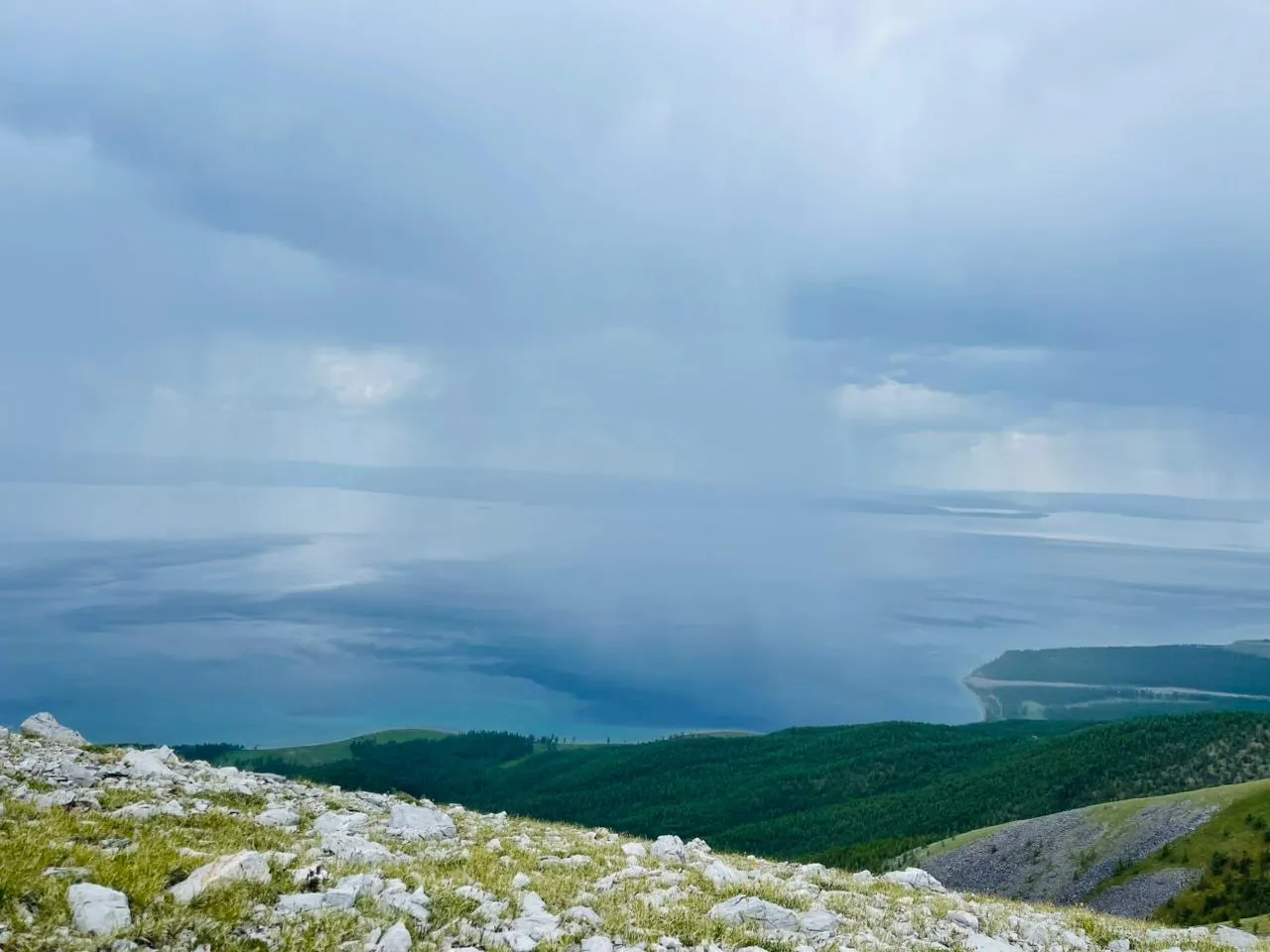
A landscape from Northern Mongolia: khuvsgul lake, taiga, tsaatan reindeer herders.

7–20 days · 4 itineraries

Northern Mongolia.

Khuvsgul Lake, the Tsaatan reindeer herders, Amarbayasgalant Monastery, taiga forest. Four itineraries from seven to twenty days.

On this page

Northern Mongolia.

A Northern Mongolia tour takes you into the country's forested north – Khuvsgul Lake (the "Blue Pearl"), 136 kilometers long and 36 kilometers wide, holds nearly 70 percent of Mongolia's freshwater at 1,645 meters elevation. Above the lake, in the Darkhad Valley, the Tsaatan (Dukha) reindeer-herding families still keep their seasonal camps in the taiga – one of the last reindeer-herding cultures left in the world. Amarbayasgalant Monastery in the Selenge basin is one of the three largest Buddhist monastic complexes in Mongolia, and Uran Togoo is an extinct volcano you can walk to the rim of in 30 minutes.

All four of our Northern Mongolia itineraries begin and end in Ulaanbaatar. The 7-day stays close to Khuvsgul Lake; the 10-day adds Terkh White Lake, Khorgo Volcano, Tsenkher Hot Springs, and Karakorum on the return; the 12-day rides three days deep into the Darkhad Valley to live with Tsaatan reindeer-herding families; and the 20-day grand tour combines Northern Mongolia (with the Tsaatan) with Central Mongolia and the Gobi Desert in a single loop. Travel is by Toyota Land Cruiser, with horseback riding for the Tsaatan trek and a mix of ger camps and family stays for accommodation.

Why a Northern Mongolia tour.

Northern Mongolia is forested where the rest of the country is steppe. Khuvsgul Lake is the second-largest freshwater lake by volume in Asia and the cleanest large lake on the continent – clear enough to see 20 meters down in summer. The taiga forest above the lake reaches into the Sayan Mountains along the Russian border, the southern edge of the Siberian boreal forest. This is the part of Mongolia that doesn't fit the steppe-and-dunes picture most travelers carry into the country.

For travelers comparing regions, a Northern Mongolia tour is usually the third or fourth Mongolia trip. Central Mongolia is the obvious first visit; the Gobi suits the second; Northern (with Khuvsgul and possibly the Tsaatan) is for travelers with more time and a specific interest in lake-and-forest landscapes or the reindeer-herding culture. The 20-day grand tour combines all three regions in a single loop and is our longest standard itinerary.

Northern distances are long – Khuvsgul Lake is 800 kilometers from Ulaanbaatar, and the road north is mostly paved as far as Murun (the provincial capital), then dirt to the lakeshore. The Darkhad Valley and the Tsaatan camps add another 200 kilometers of dirt and 30 to 40 kilometers of horseback riding. Plan for 5 to 7 hours of driving on transfer days, with shorter touring days at the lake.

What to see on a Northern Mongolia tour.

01

Khuvsgul Lake

Khuvsgul (also spelled Hovsgol or Khövsgöl) is the second-largest freshwater lake by volume in Asia – 136 kilometers long, up to 36 kilometers wide, 262 meters deep at its lowest point, and 1,645 meters above sea level. The lake holds nearly 70 percent of Mongolia's freshwater. Most Northern itineraries spend at least two days here for shore walks, kayaking, horseback riding along the western shore, and short hikes up to the ridges above the lake.

Khuvsgul Lake, Northern Mongolia.

02

The Tsaatan reindeer herders

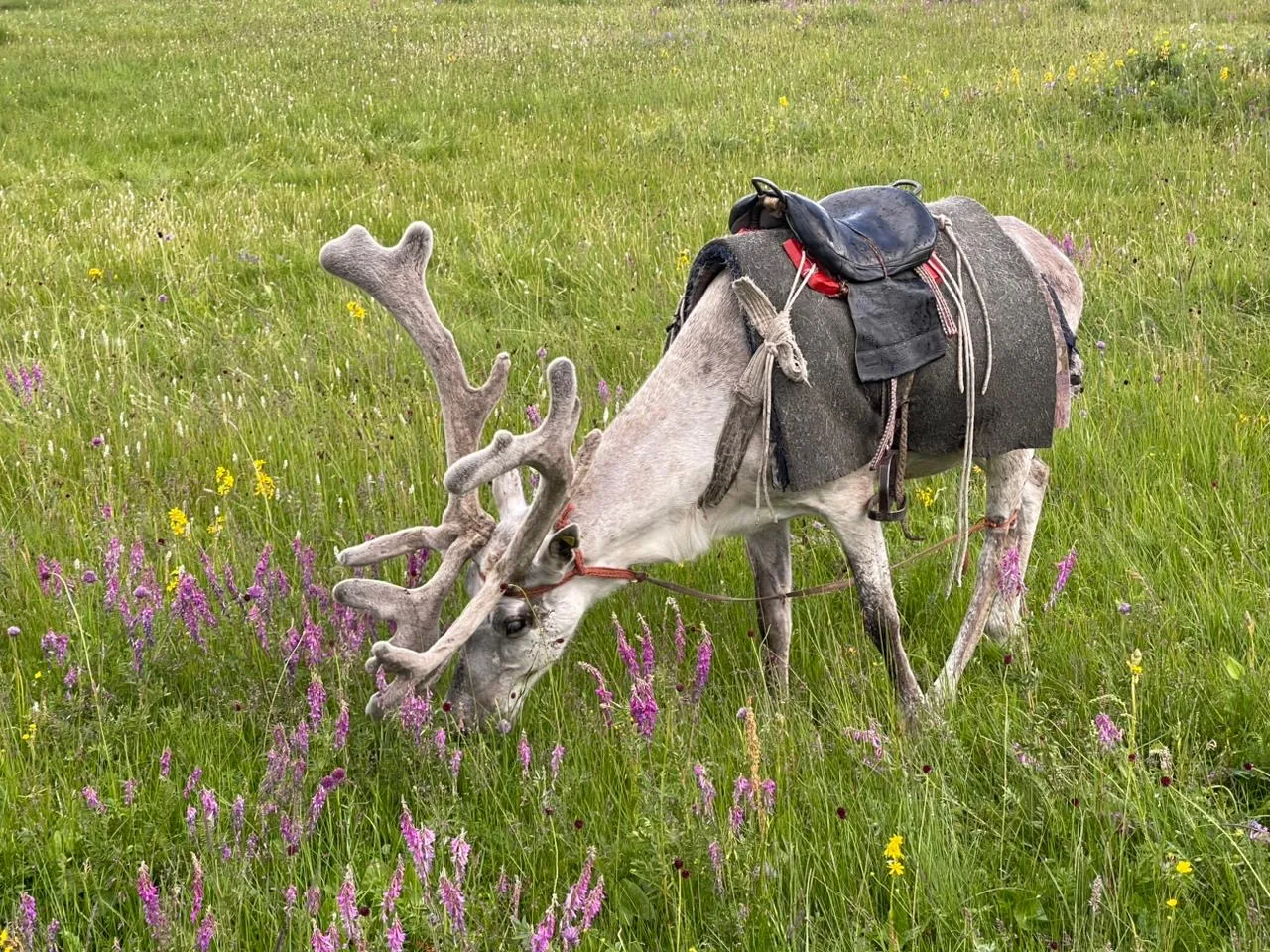
The Tsaatan (also called Dukha) are one of the last reindeer-herding cultures in the world. Around 200 to 300 people in 30 to 40 families still live a semi-nomadic life in the taiga north of Khuvsgul, moving their reindeer herds between seasonal pastures. The 12-day tour rides three days into the Darkhad Valley and the East Taiga to spend two nights at a Tsaatan camp – a genuine cultural visit, not a staged demonstration.

03

Amarbayasgalant Monastery

One of the three largest Buddhist monastic complexes in Mongolia, built between 1727 and 1736 in honor of Zanabazar (the first Bogd Gegeen of Mongolian Buddhism). The complex of 28 temples in the Selenge basin survived the 1937 communist purges with most of its outer walls intact – an exception in a country where most monasteries were destroyed. Reconstruction of the inner buildings has been ongoing since the 1990s.

04

Uran Togoo extinct volcano

An extinct volcano in Bulgan province, last erupted around 20,000 to 30,000 years ago. The crater is 500 to 600 meters wide and 50 meters deep, with a small lake at the bottom. The hike up to the rim takes about 30 to 40 minutes on a moderate path. Worth the stop on the drive between Amarbayasgalant and Khuvsgul.

05

The Darkhad Valley

A mountain valley between the Khoridol Saridag Mountains and the Sayan range, north of Khuvsgul Lake. The valley is the gateway to the East Taiga where the Tsaatan reindeer herders camp. The drive in is on dirt tracks; the final three days are on horseback. Wide alpine pastures, scattered larch forest, the headwaters of the Shishged River. One of the most remote inhabited regions in Mongolia.

When to take a Northern Mongolia tour.

Northern Mongolia tours run June through September. The 12-day Tsaatan tour runs June through August only – the Tsaatan camps move with the seasons and the Darkhad Valley road can become unreliable in September. June and August are peak: warm days at Khuvsgul (around 20 to 25°C), cool nights, the lake fully open. Mid-July through August is the warmest window and the best time for kayaking or swimming in the lake.

September is a good shoulder month for Khuvsgul itself – fewer travelers, gold larch leaves, cooler nights. We do not run Northern Mongolia tours from October through May: the lake freezes by late October and most ger camps close. The 20-day grand tour runs June through September because it includes the Gobi (which has a longer season) but is constrained by the Tsaatan portion.

How our Northern tours run.

All Northern Mongolia tours start and end in Ulaanbaatar. Travel is by Toyota Land Cruiser or equivalent, appropriate to the dirt-track sections north of Murun. Accommodation alternates between established ger camps (private bedding, communal dining, shared bathing facilities) and stays with nomadic families. The Tsaatan portion of the 12-day and 20-day tours involves three days of horseback riding (around 30 to 40 kilometers each direction) into the East Taiga and two nights camping at a Tsaatan camp.

Most days include 4 to 7 hours of driving with stops every 90 minutes; touring days at Khuvsgul, Amarbayasgalant, and the Tsaatan camps are shorter, with walks, rides, and time at the sites. Group sizes are two to six guests – the trip you book is your trip, with your group only. We do not run scheduled departures with strangers. Drivers are people we have worked with for years, and Buya (our tour leader) joins each trip in person.

Itineraries

Tour Days Adds Skips Best for Ask
Northern Mongolia · 7 days 7 days Amarbayasgalant Monastery, Uran Togoo extinct volcano on the way Tsaatan reindeer trek, Terkh Lake, Karakorum Travelers with a week focused on Khuvsgul Lake Ask →
Northern Mongolia · 10 days 10 days Terkh White Lake, Khorgo Volcano, Tsenkher Hot Springs, Karakorum Tsaatan reindeer trek Travelers wanting Khuvsgul plus Khangai sights and the cultural core Ask →
Northern Mongolia · 12 days with the Tsaatan 12 days Three-day horse trek into the Darkhad Valley with two nights at a Tsaatan camp Karakorum / Central cultural loop Travelers specifically wanting the Tsaatan reindeer-herding visit Ask →
Northern Mongolia · 20 days · Grand Tour 20 days Northern (with Tsaatan), Central core, and Gobi loop in one trip Western Mongolia / Altai (separate 14- or 22-day trips) Travelers with 3+ weeks who want most of Mongolia in a single loop Ask →

7 days · June – September

Northern Mongolia · 7 days

Seven days north: Khanui River, Khuvsgul Lake (the Blue Pearl), Uran Togoo extinct volcano, and Amarbayasgalant Monastery.

10 days · June – September

Northern Mongolia · 10 days

Ten days: Amarbayasgalant Monastery, Uran Togoo, Khuvsgul Lake, Shine Ider, Terkh White Lake and Khorgo Volcano, Tsenkher Hot Springs, and Karakorum.

12 days · June – August

Northern Mongolia · 12 days with the Tsaatan

Twelve days, including a three-day horse trek deep into the Darkhad Valley to live with Tsaatan reindeer-herding families. Khuvsgul Lake, Uushigiin Uvur deer stones, and Khugnu Khan on the return.

20 days · June – September

Northern Mongolia · 20 days · Grand Tour

A full grand tour: Northern Mongolia (with the Tsaatan), Central Mongolia (Karakorum, Tovkhon, Orkhon Waterfall), and the Gobi (Bayanzag, Khongor Dunes). Twenty days from Amarbayasgalant to Tsagaan Suvarga.

Itineraries flex to your dates. Talk to us about adjusting routing, pacing, or season.

Northern Mongolia tour: common questions.

What is the best time to visit Northern Mongolia?

Mid-July through August is peak season for a Northern Mongolia tour: warm days at Khuvsgul (around 20 to 25°C), cool nights, all ger camps open, the lake fully thawed. June is a good shoulder month with fewer travelers and the larch forest at its greenest. September is also a good Khuvsgul month – gold larches, fewer crowds, cooler nights – but the 12-day Tsaatan tour does not run in September. We do not run Northern tours from October through May.

How many days do I need for a Northern Mongolia tour?

Seven days is the minimum for a Northern tour focused on Khuvsgul Lake (with a stop at Amarbayasgalant Monastery and Uran Togoo on the way). Ten days adds Terkh White Lake, Khorgo Volcano, Tsenkher Hot Springs, and Karakorum on the return. Twelve days is what you need for the Tsaatan reindeer-herding visit (three days of horse trekking each direction). Twenty days is the grand tour combining Northern, Central, and the Gobi.

Who are the Tsaatan reindeer herders?

The Tsaatan (also called Dukha) are an indigenous people of the East and West Taiga around the Darkhad Valley in northern Mongolia. They are one of the last reindeer-herding cultures left in the world – around 200 to 300 people in 30 to 40 families, semi-nomadic, moving with their reindeer between seasonal pastures. They live in conical tents (urts, similar to a tipi) rather than gers. The 12-day Tsaatan tour and the 20-day grand tour spend two nights at a Tsaatan camp.

Can I see the Tsaatan reindeer herders without the long horse trek?

Not really – there is no road into the Tsaatan camps in the East Taiga. The three-day horse trek each way is the only way to reach a working Tsaatan camp. Some travelers visit displaced Tsaatan families closer to Khuvsgul Lake; we generally recommend against this because those visits can be staged and inauthentic compared to time at a working seasonal camp. If you want a Northern Mongolia tour without the Tsaatan trek, choose the 7-day or 10-day variants.

Can I swim in Khuvsgul Lake?

Yes, in July and August, with caveats. The lake is fed by mountain streams and stays cold (around 14 to 16°C in mid-summer); short dips are most travelers' approach rather than long swims. The water is exceptionally clear – clear enough to see 20 meters down. Wear water shoes; the shoreline is rocky in many places. Kayaking and small-boat trips are also available at the western-shore ger camps.

What is included in a Northern Mongolia tour?

Specific inclusions confirmed at booking; typically: private vehicle and English-speaking driver, all accommodation (ger camps and family stays), all meals on tour, all entrance fees, bottled drinking water. The 12-day and 20-day Tsaatan trips additionally include horses for the trek, tents for the camping nights, and a horse trek guide. Excluded: international flights, Ulaanbaatar hotel nights, optional kayaking, gratuities. Final inclusions are confirmed in writing before any payment.

How much driving on a Northern tour?

Northern distances are long. Ulaanbaatar to Khuvsgul is around 800 kilometers; mostly paved as far as Murun (the provincial capital, 670km) and dirt for the final 100 to 130 kilometers to the lakeshore. The 7-day tour includes around 1,800 kilometers of driving total. The 10-day tour around 2,400 kilometers. The 12-day Tsaatan tour around 1,700 kilometers of road plus 60 to 80 kilometers of horseback riding. The 20-day grand tour around 4,000 kilometers.

What kind of accommodation on the Tsaatan trek?

Two nights at a Tsaatan camp staying in or beside one of the family's urts (the conical tipi-style tents the Tsaatan use). Bedding is provided. Toilet is a dug pit at a discreet distance from camp; washing is in the stream or with a basin from boiled water. Genuinely basic – the trade-off is the experience of two nights in an active seasonal Tsaatan camp.

How does Northern Mongolia compare to Central?

Central Mongolia is steppe, monasteries, and imperial heritage – a softer landscape with shorter distances and paved roads for much of the way. Northern Mongolia is forest, lake, and the reindeer-herding culture – a different ecosystem (taiga rather than steppe), longer drives, more remote terrain. Central is the obvious first-time-in-Mongolia trip; Northern suits travelers with more time and a specific interest in lake-and-forest or the Tsaatan.

Can I combine Northern with the Gobi?

Yes – the 20-day grand tour combines Northern Mongolia (including the Tsaatan trek), Central Mongolia (Karakorum, Tovkhon, Tsenkher Hot Springs, the Orkhon Valley), and the Gobi Desert (Khongor Dunes, Bayanzag Flaming Cliffs, Yoliin Am, Tsagaan Suvarga) in a single loop. It is our longest standard itinerary. For a shorter Northern-and-Gobi option, talk to us about a custom 14 to 16 day route.

Tell us what you want to see.

Baska replies personally, in your language. There is no obligation.

Chat on WhatsApp Baska replies within 24 hours, Mon–Sat (UB time). Contact
Inquire about this region

Compare tours