
- Central Mongolia
- Karakorum
- Orkhon Valley
- Tovkhon Monastery
- Tsenkher Hot Springs
- Erdene Zuu
- Mongolia first trip
If you have between five and nine days in Mongolia and have never been before, the answer is almost always Central Mongolia. The reason is geography. Mongolia is 1,500 kilometers from Ulaanbaatar to the Altai, and most of the country off the paved network. Central Mongolia is the part you can reach by paved road for most of the route, which means a five-day trip can actually contain five days of country, not just five days of driving.
This piece walks through what a typical Central Mongolia week looks like, from the perspective of someone who runs them. The sites are the same ones you’ll find in our 5-day, 6-day, 7-day, and 9-day variants. The pacing is what we’ve worked out over years of running them.
The road west
The drive out of Ulaanbaatar starts on the A0301, the main road south and west across the country. The first 380 kilometers, as far as Karakorum, are paved. That sounds like a lot but it’s about six hours including stops, and the country opens up almost immediately. By the time you’ve cleared the city’s outskirts, the steppe is on every side, flat, rolling, and the colour Mongolians describe with words English doesn’t quite have.
Most of our Central trips break the first day at Bayan Gobi, a small desert at the foot of the Khangai mountains, 80 kilometers long, where two-humped Bactrian camels are kept for short rides. Travelers who picture Mongolia as steppe-only are usually surprised that there are dunes here, four hours from the capital. We stay overnight at a family ger camp at the edge of the dunes; that first night, before you’ve reached anything famous, is often the one travelers remember.
Karakorum and Erdene Zuu
Karakorum was the 13th-century capital of the Mongol Empire under Ögedei Khan. The wooden imperial city was abandoned in the 1380s and built over with monasteries; what’s there now is small, but the meaning is in the place. The Karakorum Museum displays archaeological finds from the Orkhon Valley, bronze cauldrons, stone steles, the faint physical evidence of a city that ruled most of the Eurasian landmass.
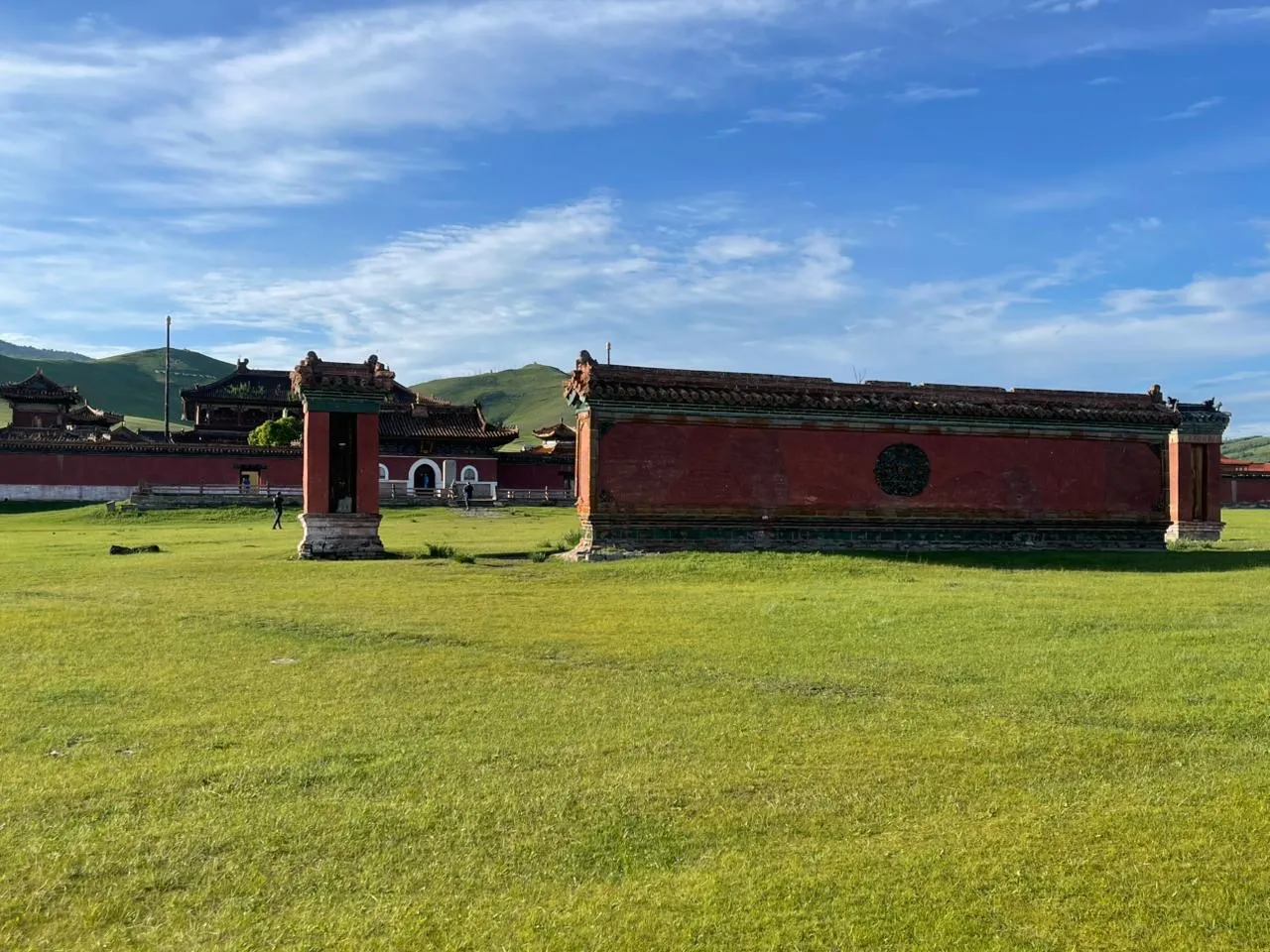
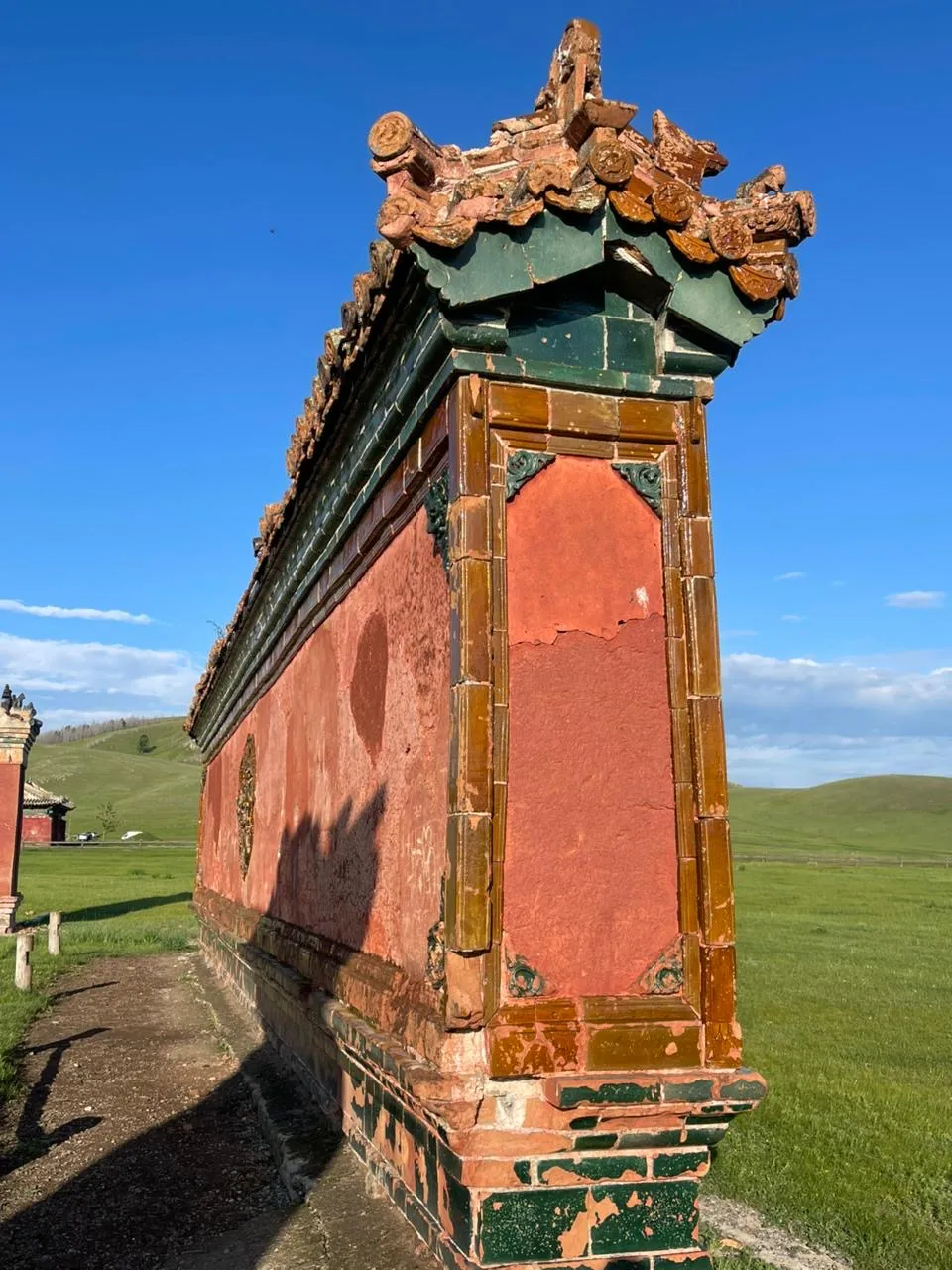
The site’s centerpiece today is Erdene Zuu Monastery, founded in 1586 on the imperial ruins. Mongolia’s oldest standing Buddhist monastery, with 108 white stupas around the compound. Most of the inner buildings were destroyed during the 1937 communist purges; what survived, and what’s been rebuilt since the 1990s, sits inside the original imperial walls. Half a day is standard. The site rewards quiet, it is most photographed at sunrise, when the stupas are still in shadow and the mountains behind them are catching first light.
The Orkhon Valley
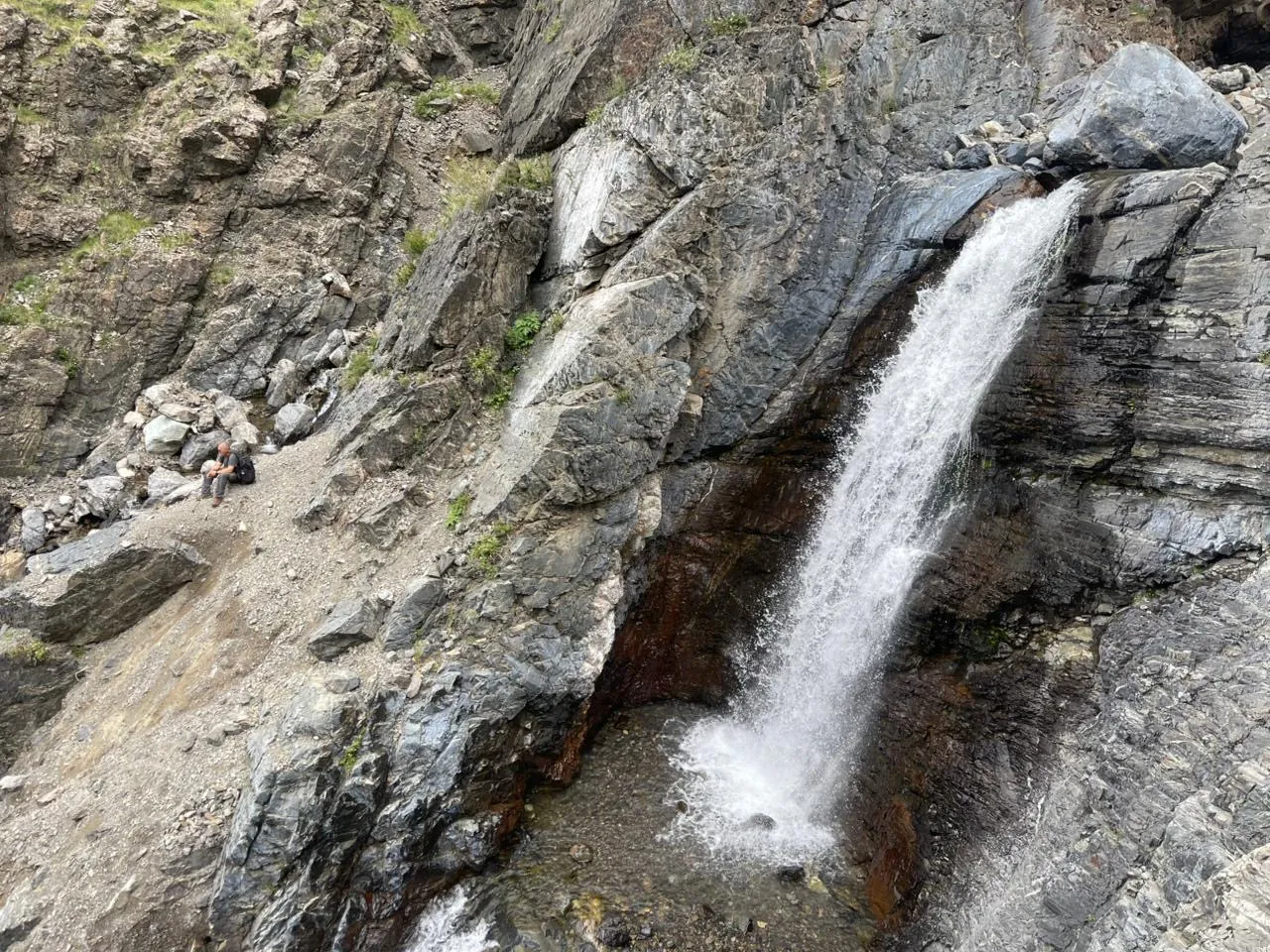
From Karakorum, most itineraries continue south into the Orkhon Valley itself, a UNESCO World Heritage Site that follows the Orkhon River through grassland and forested hills. The valley’s centerpiece is the Orkhon Waterfall (Ulaan Tsutgalan), formed by volcanic activity around 20,000 years ago and dropping 24 meters into a basalt gorge.
This is the day on most Central trips when guests want more than they expected. Yaks graze the valley floor; nomadic families spread their camps across it. Horse riding here is the standard activity, three to four hours, easy pace, along the riverbank. We work with the same families year after year; they know the trip is coming and have horses saddled. If the weather turns, we don’t ride, there’s no schedule that overrides the steppe.
Tovkhon Monastery and Tsenkher Hot Springs
Tovkhon Monastery sits on a 2,312-meter rocky peak in dense forest, founded in 1651 by Zanabazar, the first Bogd Gegeen of Mongolian Buddhism and the artist who shaped much of the country’s religious art. The walk up takes about thirty minutes; the meditation caves and panoramic views are worth the climb. This is one of the few places where the country’s Buddhist heritage feels not historical but continuous, monks still keep the site, and the path up is worn by pilgrim feet.
Tsenkher Hot Springs is the evening that pairs with Tovkhon. Mineral water emerges naturally at 85°C and is cooled for outdoor pools, set among forested hills, cliffs, and rivers. It’s the rare place on a Central Mongolia itinerary where you can soak after a long driving day. Most guests use the evening at Tsenkher to sit, talk, and let the country settle.
What the longer variants add
The 5-day is the cultural core. The 6-day adds Hustai National Park and its wild Przewalski horses on the return, a wildlife morning before the drive back to Ulaanbaatar. The 7-day with Terelj substitutes a national-park visit; the 7-day with Terkh swaps in a remote alpine lake and an extinct volcano. The 9-day adds a four-day horseback trek into the Eight Lakes (Naiman Nuur), the most demanding variant we run in this region.
For travelers comparing regions: a Central Mongolia tour is the obvious first Mongolia trip. The Gobi Desert suits a second visit; Northern Mongolia and Khuvsgul Lake suit a third. If you have two weeks, the 10-day Gobi-and-Central tour combines both regions in one loop and is the most popular itinerary we run.
When to come
The Central Mongolia tour season runs May through September. June through August is peak: long days, green steppe, accessible mountain passes, ger camps fully open. Naadam, the national festival, falls July 11-13 each year and is a high-demand window; book early. May and September are good shoulder months. Fewer travelers, cooler nights, the green still on the land in May, gold leaves in September.
We don’t run Central tours from October through April: most ger camps close, and unpaved sections of the route can become unreliable in winter and early spring. If your dates fall outside the window, see the planning guide for what is possible and what isn’t.
A note on pacing
Most Central days include four to six hours of driving; some are shorter, with horseback riding through the Orkhon Valley or short hikes around Tovkhon. Group sizes are two to six guests, we don’t run scheduled departures with strangers; the trip you book is your trip, with your group. Buya joins each trip in person, drivers are people we have worked with for years, and the route changes when the weather changes. None of that is unusual; it’s just how a country with these distances has to be travelled.
If you’re trying to choose between Central, the Gobi, or one of the other regions, the planning guide lays out the four most common shapes by length and season. Otherwise, write to us with your dates and what you most want to see. Baska replies personally, in writing, within a week.
Related reading
-
A week in the Gobi Desert: dunes, fossils, and the long roads between
What a Gobi tour week actually contains. Tsagaan Suvarga, Yolyn Am, the Khongor Singing Dunes, the Bayanzag Flaming Cliffs, and why distance is part of the experience.
-
Two weeks in Northern Mongolia: Khuvsgul Lake and the Tsaatan reindeer herders
What a Northern Mongolia trip actually involves, the long drive to the Blue Pearl, three days of horse trek to live with reindeer-herding families, and why this is a third or fourth visit.
-
Choosing your first Mongolia trip
A short guide to picking a Mongolia tour by length, season, and region, with the trade-offs we tell every traveler before they book.
If this was useful, the next step is either a fixed itinerary or a custom one. Both start with a conversation.