
Skip to content
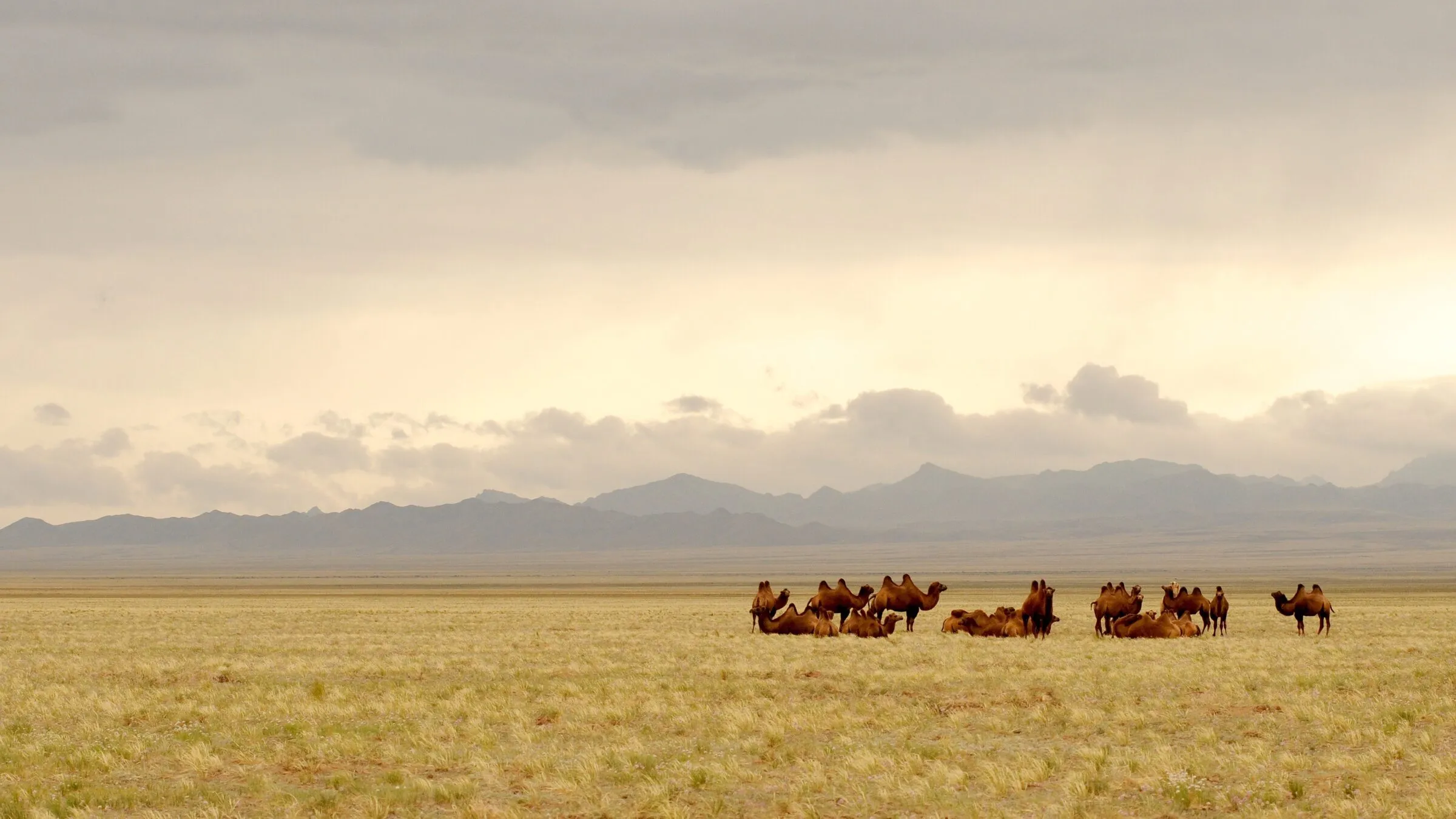
A landscape from Gobi Mongolia, the setting for the Gobi Desert · 7 days.

Gobi Mongolia · 7 days

Gobi Desert · 7 days

An expanded Gobi loop adding Baga Gazariin Chuluu granite mountains and Ongi Monastery to the four landmark Gobi sites.

On this page

Overview.

This 7-day Gobi Desert tour is the same core Gobi loop as our 6-day, with two extra stops the shorter version skips: Baga Gazariin Chuluu (a granite-rock formation in Dundgovi province with monastery ruins and steppe vistas) at the start, and Ongi Monastery (the largest pre-1937 monastery in the country, ruined under Soviet purges and now slowly rebuilt) on the way back. The standard four landmark Gobi sites are all included: Tsagaan Suvarga's white limestone cliffs, Yoliin Am ice canyon in the Gurvan Saikhan Mountains, the Khongor Singing Dunes with Bactrian camel riding, and the Bayanzag Flaming Cliffs. Travel is by Toyota Land Cruiser; group size is two to six guests.

Duration
7 days
Best season
May – September
Group size
2–6 guests

Pricing is tailored to your dates and group size. Final quote in USD, sent within 24 hours.

Departures

Departures run on request through the season, tell us your dates and we hold a date for you.
Quick facts

Total distance
2,000–2,200 km
Driving days
6 of 7
Longest single drive
6–7 hours (Day 7 return)
Maximum altitude
~2,300 m (Yoliin Am)
Start / end
Ulaanbaatar
Group size
2–6 guests
Languages
English (Buya); driver speaks working English

Day by day.

Day 1: Baga Gazariin Chuluu

Visit Baga Gazariin Chuluu, one of the most scenic areas of the Gobi, featuring granite rock formations rising up to 1,700 meters above sea level. This mountain area is home to ibex and birds of prey such as vultures, hawks, and eagles. Meet a local nomadic family and learn about their traditional lifestyle.

Day 2: Tsagaan Suvarga (White Stupa)

Explore Tsagaan Suvarga, meaning “White Stupa,” one of the Gobi’s most iconic landmarks. These colorful limestone cliffs rise 30–60 meters high and stretch over 400 meters. Once an ancient ocean bed, the area still contains marine fossils and shells. The cliffs are especially striking at sunrise and sunset. Enjoy hiking and photography among the dramatic formations.

Day 3: Gobi Gurban Saikhan National Park & Yoliin am

Travel to Gobi Gurban Saikhan National Park, meaning “Three Beauties of the Gobi.” Explore Yoliin Am, a deep, narrow canyon that remains shaded and icy until early summer. Hike 2.0–2.5 hours through the valley, home to ibex and endangered argali sheep.

Day 4: Khongor Sand Dunes

Drive to the spectacular Khongor Sand Dunes, also known as the Singing Dunes due to the sound created by the wind. Climb the dunes in the early morning or evening for wide-open views of the desert landscape.

Day 5: Camel Riding

Enjoy riding the two-humped Bactrian camels, well adapted to the desert and comfortable for travelers. Experience off-road driving and immerse yourself in the vast Gobi scenery.

Day 6: Flaming Cliffs (Bayanzag)

Visit Bayanzag, famously known as the Flaming Cliffs, one of the world’s most important paleontological sites. In 1922, Roy Chapman Andrews discovered the first dinosaur eggs here. Walk through the red sandstone cliffs where dinosaurs lived over 60 million years ago.

Day 7: Ongi Monastery – Return to Ulaanbaatar

In the morning, we will visit the ruins of Ongi Monastery near Saikhan Ovoo village. Built in the late 18th century, it was once home to over 500 monks but was largely destroyed during the purges of the 1930s. After lunch, we will drive back to Ulaanbaatar.

Why this trip.

This 7-day Gobi Desert tour is the right itinerary for travelers who want the four landmark Gobi sites plus two stops that the shorter 6-day variant cannot fit. Baga Gazariin Chuluu ("Small Land of Stones") on Day 1 is a granite-rock formation rising from the steppe in Dundgovi province – cave springs, monastery ruins from the early 19th century, and a different kind of Gobi landscape from the dunes and clay cliffs farther south. Ongi Monastery on Day 7 was once the largest monastic complex in Mongolia, with around a thousand monks before the 1937 communist purges destroyed it. The site is being slowly rebuilt; the ruined walls and the rebuilt temples sit side by side along the Ongi River.

For travelers comparing options: the 6-day Gobi covers the four landmark sites in a tighter loop without Baga Gazariin Chuluu or Ongi Monastery. The 7-day Gobi-and-Terelj combines the Gobi with two final days at Terelj National Park near Ulaanbaatar (rocky formations, the Chinggis Khan statue). The 8-day adds Karakorum and Erdene Zuu on the return; the 9-day extends Karakorum further; the 10-day combines the full Gobi loop with the full Central Mongolia core. The 7-day is the right choice when the Gobi is your main interest and you want the granite-and-monastery additions, not a combined region trip.

What's included.

Included

  • Private Toyota Land Cruiser or equivalent vehicle for all transfers
  • Experienced local driver and English-speaking guide (Buya)
  • All accommodation on tour: ger camps and one nomadic camel-herding family overnight
  • All meals during the tour (breakfast, lunch, dinner)
  • All entrance fees: Gobi Gurvan Saikhan National Park, Bayanzag, Khongor dune access, Baga Gazariin Chuluu, Ongi Monastery
  • Bottled drinking water throughout
  • Bactrian camel ride at the Khongor Sand Dunes

Not included

  • International flights to and from Ulaanbaatar
  • Optional one-way domestic flight Ulaanbaatar–Dalanzadgad (available on request)
  • Pre and post-tour Ulaanbaatar hotel nights (we can recommend or arrange)
  • Mandatory travel insurance with medical evacuation cover
  • Optional activities not in the itinerary
  • Personal expenses, alcoholic beverages, laundry
  • Gratuities for guide and driver (appreciated but not required)

Travel insurance is required. We recommend SafetyWing or World Nomads, see the Before-you-go guide.

Where you stay.

Five of your six nights on this 7-day Gobi Desert tour are at established ger camps – traditional Mongolian felt tents at tourist camps with private bedding, communal dining, and shared shower and toilet blocks. One night is with a nomadic camel-herding family in their working ger camp at the Khongor Dunes – simpler, no shower, but the most authentic experience of the route. Bedding is provided. The first and last nights of the trip are at your hotel in Ulaanbaatar (not included; we can recommend or arrange).

What to bring.

After booking, we send a detailed packing list customized to your dates. The Gobi essentials: layered clothing for warm days and cold nights (the desert drops sharply after dark), strong sun protection (broad-spectrum SPF, brimmed hat, sunglasses, lip balm), a wind-and-dust shell for afternoons on the dunes, sturdy walking shoes for the Yoliin Am canyon and the Khongor climb, a small daypack, headlamp or torch (ger camps have limited lighting), a reusable water bottle, hand sanitiser, and any personal medications. For shoulder-season trips (May or September), add a warm fleece, gloves, and a hat – nights can drop below freezing. A power bank is useful as backup; most ger camps have power outlets but not always reliable.

See packing notes in our Before-you-go guide →

Common questions.

What is Baga Gazariin Chuluu?

Baga Gazariin Chuluu ("Small Land of Stones") is a granite-rock formation in Dundgovi province on the way south from Ulaanbaatar to the Gobi. It rises from the steppe to about 1,768 meters and contains cave springs, the ruins of an early 19th-century monastery, and good walking and viewpoint hikes. It is a different kind of Gobi landscape from the dunes and clay cliffs farther south – a useful first stop on the 7-day route to break up the long drive from Ulaanbaatar.

What is Ongi Monastery?

Ongi Monastery (Ongiin Khiid) on the banks of the Ongi River was once one of the largest monastic complexes in Mongolia – two monasteries on opposite riverbanks with roughly a thousand monks combined. The 1937 communist purges destroyed both; only the ruined walls remained for decades. Reconstruction began in the 1990s, and a small temple, museum, and stupa now stand on the original site. The contrast between the ruined walls and the new buildings is the visual story of the place.

How is this 7-day Gobi tour different from the 6-day?

The 7-day Gobi adds two stops the 6-day skips: Baga Gazariin Chuluu (Day 1) and Ongi Monastery (Day 7). The four landmark Gobi sites – Tsagaan Suvarga, Yoliin Am, the Khongor Sand Dunes, and Bayanzag's Flaming Cliffs – are all included on both. Choose the 7-day if you want the granite-rock and monastic additions; choose the 6-day if you want the tighter version with no extras.

What is the best time of year for the 7-day Gobi tour?

June through August is peak season for the 7-day Gobi Desert tour – warm days around 30°C, cool nights, all ger camps fully open, the Khongor dunes accessible. May and September are good shoulder months: fewer travelers, cooler nights, shoulder light on the cliffs at sunrise and sunset. We do not run this tour from October through April – most ger camps along the route are closed.

How much driving on the 7-day Gobi tour?

Total driving is roughly 2,000 to 2,200 kilometers across seven days – longer than the 6-day because of the Baga Gazariin Chuluu and Ongi Monastery additions. The longest single days are Day 1 (Ulaanbaatar to Baga Gazariin Chuluu, around 5 to 6 hours) and Day 7 (Ongi Monastery back to Ulaanbaatar, around 6 to 7 hours). Most of the route is dirt and gravel tracks; the Land Cruiser handles them comfortably but the pace is slower than paved highways.

Where do you stay on the 7-day Gobi tour?

Most nights are at established ger camps – traditional felt tents with private bedding, communal dining, and shared shower and toilet facilities. One night is with a nomadic camel-herding family at the Khongor Dunes; that night is simpler but the most authentic experience of the route. The first and last nights of the trip are at your Ulaanbaatar hotel.

Can I climb the Khongor Sand Dunes?

Yes. The dunes run 180 kilometers along the foot of the Altai and reach 80 meters at their highest point. A short Bactrian camel ride takes you to the base; the climb itself is 30 to 45 minutes through soft sand, and the descent takes about ten minutes. It is steep but not technical. Most travelers climb one face. The wind-driven hum that gives the dunes their name (the "Singing Dunes") is audible when sand spills down a steep face at the right angle.

What is included in the 7-day Gobi tour?

Specific inclusions confirmed at booking; typically: private vehicle and English-speaking driver, all accommodation (ger camps and one family stay), all meals on tour, all entrance fees including Baga Gazariin Chuluu and Ongi Monastery, bottled drinking water, the Khongor camel ride. Excluded: international flights, Ulaanbaatar hotel nights, optional Dalanzadgad flights, gratuities. Final inclusions are confirmed in writing before any payment.

Can I fly to the Gobi instead of driving?

Yes, on this 7-day tour. A one-way domestic flight is available between Ulaanbaatar and Dalanzadgad (around 90 minutes); travelers can fly down and drive back, or vice versa, which trims roughly two long driving days off the route. Flights are seasonal and weather-dependent – we confirm availability and pricing at booking.

Is the 7-day Gobi tour suitable for families with children?

Yes for older children (around 8 and up). The longer driving days (5 to 7 hours) and the soft-sand climb at Khongor can be tiring for very young travelers. The Bactrian camel ride, the dinosaur-fossil ground at Bayanzag, and the rock formations at Baga Gazariin Chuluu tend to engage older children well. Specific family-policy details confirmed at booking.

Book this trip.

Baska replies personally, in your language, within 24 hours. We can adjust dates, routing, and pacing.

Chat on WhatsApp Baska replies within 24 hours, Mon–Sat (UB time). Or email us

Not sure which tour fits your dates? See the planning guide.

Other journeys in Gobi

Inquire about this trip

Compare tours